
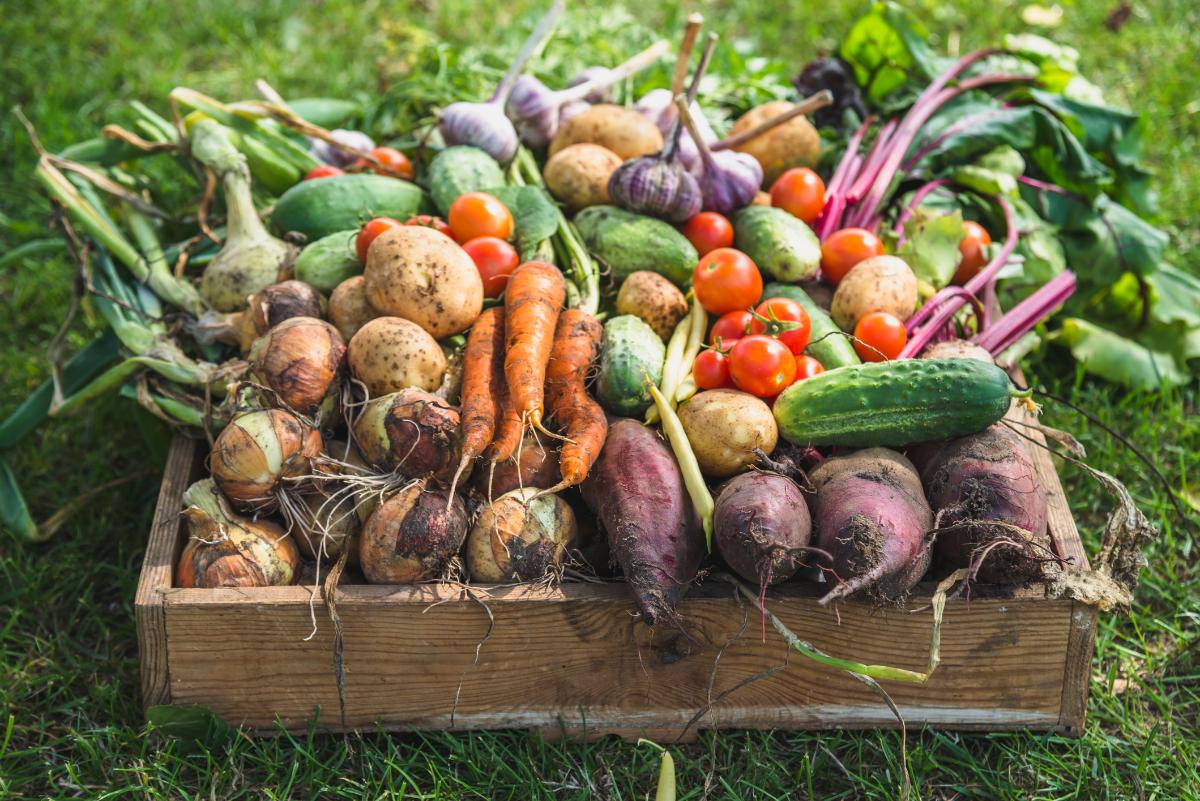
Did you know that even after washing your produce, there’s still a chance you’ll find pesticides on them?
In fact, research found that 70% of the produce sold in America contains pesticide residue, which can be harmful.
That’s why organic farming is more necessary today than it ever was! Organic farming doesn’t force you to use chemicals to enhance your garden and help it flourish.
Instead, it invites you to use old farming methods, where there aren’t pesticides, herbicides, or insecticides!
How does it work, though, and who created it? That’s what we plan to explore today!
The Inventors of Organic Farming
Many botanists stand behind the development of organic farming like F.H. King and Rudolf Steiner.
However, only one botanist is known as the father of modern organic agriculture: Sir Albert Howard! Sir Howard was the first to apply modern, scientific approaches to traditional agriculture.
The botanist worked in India with his wife, a plant physiologist, and both were impressed by the Indian’s farming methods. Consequently, they advocated for those sustainable ways to the West.
They documented all they saw there and regarded the Indian farming methods as superior to the conventional techniques used back then.
By 1940, Sir Albert Howard had compiled his research into a book, An Agricultural Testament, where he focused on the importance of nature and soil fertility.
In a way, this book became the founding text for organic farming.
At a time when chemical-based industrialized agriculture was beginning to alter produce radically, his book stood as a powerful counterpoint.
Important Organic Farming Practices
The basics of organic farming tell you not to use pesticides or insecticides. Yet, with so many of us falling back on these chemicals for our gardens to thrive, how do we avoid them?
Here’s what we can tell you:
1 – Utilize Companion Planting
One of the best ways to naturally repel pests and keep them away from your garden is through companion planting.
This is a method used by most greenthumbs out there to naturally deter pests by growing certain plants together.
For example, you can plant marigolds near your tomatoes to keep nematodes at bay. Remember, you might need to research before planting marigolds as not all types are great at deterring this pest.
You can also plant mint and basil to ward off mosquitoes and flies, maybe even ants, while enjoying the herbs yourself!
2 – Attract Beneficial Insects
Now that you’ve warded off your garden against mosquitoes and flies, how do you get the ecosystem to thrive?
For starters, there are some insects that you can consider your best allies in the fight against pests!
For example, ladybugs feed on aphids, helping you avoid problems such as discoloration, leaf curling, and stunted growth. You can also attract parasitic wasps, which can attack and kill various harmful insects.
Planting flowers like dill, fennel, and yarrow, can help you attract these beneficial insects to handle the pest control for you!
3 – Use Organic Mulches
There are many types of mulching to use like bark, straw, compost, grass clippings, and much more.
However, while almost all of them are organic, using the right one can make a difference. Certain mulches not only suppress weed growth but also help retain moisture in the soil and deter pests.
For example, several inches of leaves can help block the light, stopping weed growth. Cedar mulch actually has natural insect-repelling properties that can protect your garden. Spread a thick layer around your plants to create a protective barrier.
Final Thoughts
In all fairness, organic farming can be more work than the conventional methods we know today.
After all, you’ll have to forgo using any chemicals and synthetic fertilizers and depend on the land to fend for itself and thrive.
You also must plant certain plants to attract or deter certain insects. Nonetheless, it’s a rewarding approach that offers numerous benefits—and tasty produce!

Growing up with a mom who filled her home (inside and out) with all sorts of plants, Lisa got her start in gardening at a young age. Living now on her own with a home and yard full of plants (including an indoor greenhouse), she shares all the gardening tips she’s gained over the years.